
Welcome to Science Facts Sundays.
These are some notes I took when reading Iron Rich Foods: Unlock the Iron in Your Food and Fight Iron Deficiency by Amanda Rose, Ph.D.
My daughter knows why we don’t drink milk with an iron-rich meal. She can tell you, “calcium inhibits iron absorption!”
I don’t see the point of eating foods and not being able to absorb them and utilize all their benefits. What a shame to waste the iron in our foods when we eat them with dairy products. Simply knowing to separate the foods for ultimate utilization can be helpful for combating low iron levels.
You may find this geeky - so be forewarned! If this topic doesn’t appeal to you, check back in a few weeks and I’ll have moved on to something else that you may be interested in.
Here are some morsels for you to chew on (written in my own words):
Not only does soaking your grains reduce phytic acid and unlock iron, cooking time can be reduced in half when previously soaked.
Grinding your grains before soaking gives you an edge on phytic acid reduction: a quoted study showed phytic acid in ground wheat was reduced in just an hour. Whole kernel wheat still retained almost 1/5th of the phytic acid content after twelve hours.
Not all grains are created equal. Where rye and wheat took only an hour to completely eliminate phytic acid, and barley took two, corn and oats still retained 3/4ths of the phytic acid content after 12 hours of soaking.
Adding lime to corn when soaking (masa anyone?) will help bring down the phytic acid content.
Combining a high-phytase grain with corn or oats will help reduce the phytic acid content of the corn and oats. Adding a tablespoon of ground rye to your oatmeal will help reduce the phytic acid of the oats and unlock more iron.
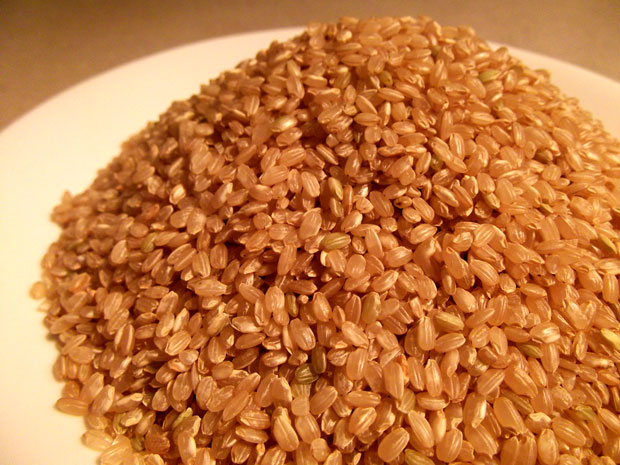
Where white rice has a low phytic acid (and mineral content) it doesn’t need to be soaked; brown rice, on the other hand, will benefit from soaking - and texture will improve as well.
Extra tip for brown rice: toss in a tablespoon or two of ground wheat, rye, spelt, or buckwheat to give it an added boost for phytic acid reduction.
That’s it for today! I hope you learned something. If you did, feel free to leave me a note in the comments  If you didn’t learn anything, then you are definitely a geek!
Next week we continue the discussion on grains and iron and phytic acid…
 Amanda Rose, Ph.D. authored Iron Rich Foods: Unlock the Iron in Your Food and Fight Iron Deficiency, where I have based these science facts. She is also the author of Rebuild From Depression: A Nutrient Guide, Including Depression in Pregnancy and Postpartum, and the Phytic Acid White Paper: Reducing Phytic Acid in Your Food. She is also the blogger behind Traditional-Foods.com.
- Intro
- Part 1
- Part 2: Meat (and some grains)
- Part 3: Soaking Cereal Grains
- Part 4: Baked Bread
- Part 5: Beans, Nuts and Seeds
- Part 6: Vegetables
- Part 7: Fruit, Dairy, Sweeteners, Herbs and Spices
- Part 8: Beverages & Cooking in Cast Iron
- Part 9 (Final): Meal Ideas
Similar Posts:

proud contributor |
| Lea Harris founded Nourishing Treasures in 2006. A mom passionate about her family's health and well-being, Lea believes education is power. Encouraging others to take baby steps in the right direction of health for their families, Lea's goal is to raise awareness of what goes into our mouths and on our bodies, providing natural alternative information that promotes health and prevents disease by using traditional foods and nature's medicine.
Lea is a Certified Health Coach graduate from Beyond Organic University, and a Certified Aromatherapist graduate from Aromahead Institute. "Like" Nourishing Treasures on Facebook, join the Nourishing Treasures Group on Facebook, follow @NourishTreasure on Twitter, and subscribe to our newsletter. You can also find me on Learning About Essential Oils forum, and Fido Fermentation Facebook group. Disclaimer: I use affiliate links wherever possible. So if you click on a link, and make a purchase, I might make a small commission, but it doesn't cost you any more. |
Comment with Facebook