
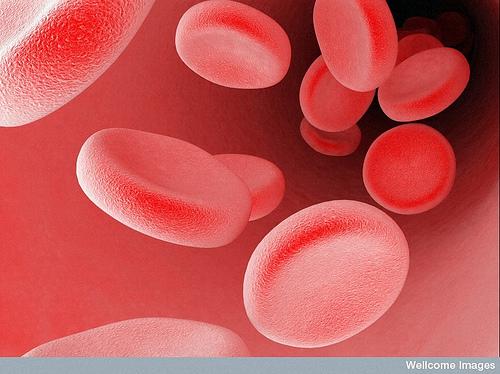
 Vitamin B-12, although only needed in small quantities, is essential for:
- forming red blood cells
- a healthy nervous system
- maintaining fertility
- preventing anemia
- promoting normal growth and development
It is also critical for heart health since it lowers serum homocysteine levels - high homocysteine levels have been correlated with build-up of plaque in arteries and the tendency to form clots.
How Much Vitamin B-12 Should I Consume Daily?
Here is a handy reference chart to be used as a guideline only:
| Children 12 months and younger | 500 mcg |
| Children 1 - 12 years | 1000 mcg |
| Teens 13 -18 years | 1,500 - 1,800 mcg |
| Adults | 2,000 - 2,400 mcg |
| Pregnant/Lactating Women | 2,800 - 3,000 mcg |
Since some damage caused by B-12 deficiency is irreversible, it pays to find out what the warning signs are…
Signs of Vitamin B-12 Deficiency
You could be deficient in Vitamin B-12 and not even recognize it as such. Here are some signs that could point to Vitamin B-12 deficiency:
- vision problems
- sleep disorders
- feeling “the blues”
- panic attacks
- weakness
- loss of balance
- tingling and numbness in hands and feet
- slow brain, such as difficulty getting your words to come out right
- loss of appetite
- dandruff
- hair loss
- sore tongue
- paleness
Vitamin B-12 Deficiency Can Lead to…
- anemia
- heart disease
- cancer
- dementia
- bacterial overgrowth
- parasites, such as tapeworms
- obsessive-compulsive disorder
- schizophrenia, hallucinations
- manic-depression
- red or white blood cell abnormalities (some irreversible)
- malabsorption
If you think you are deficient in Vitamin B-12, it would be wise to get your blood checked. If caught early, you can prevent irreversible damage to your body.
The Intrinsic Factor - Essential to Vitamin B-12 Absorption
95% of Vitamin B-12 deficiencies are due to the inability to absorb B-12. No matter how much Vitamin B-12 you’re consuming, none of it will be assimilated in your body without the intrinsic factor (IF) - an enzyme-like substance secreted by the stomach’s parietal cells.
When Vitamin B-12 enters the stomach, it binds to haptocorrin, a glycoprotein, then enters the duodenum. Pancreatic enzymes digest haptocorrin, and in the less-acidic small intestine, Vitamin B-12 can bind to IF. This new complex travels to the ileum where the epithelial cells engulf them. Inside the cell, B-12 becomes independent again before binding to transcobalamin II, allowing it to exit the epithelial cells, finally entering into the liver.
So you see, without IF, Vitamin B-12 cannot be absorbed into your cells and used in your body.
Unfortunately, there are factors that can cause IF not to take place, thus decreasing your body’s intake of B-12.
What Interferes with the Intrinsic Factor (IF)
 Heartburn Medications: The optimal stomach ph for the intrinsic factor (IF) to take place is 7. If you are on HCI-lowering drugs such as Prilosec or Nexium, etc., they will interfere with this process. Although IF doesn’t necessarily run parallel with hydrochloric acid secretion or pepsin in the gastric juice, it is wise to avoid heartburn medication which lower the hydrochloric acid in the stomach, lessening your chances of absorbing Vitamin B-12.
As an aside, heartburn medications can also allow for an increased risk of food poisoning because the acid isn’t as strong and can’t kill off as many food-related germs.
Hot Liquids: IF is inactivated in temps above 113oF, so watch those hot liquids!
What Else Can Cause Vitamin B-12 Deficiency?
Vitamin B-6 Deficiency: Vitamin B-12 requires Vitamin B-6, so if you are deficient in B-6, you will have trouble up-taking B-12; B-12 also requires the presence of Vitamin E.
Consumption of Soy: Do you make soy or spirulina a regular part of your diet? These foods contain compounds that resemble Vitamin B-12, and scientists refer to this as a B-12 analog. B-12 analog is not acknowledged by the intrinsic factor at all, and can actually cause B-12 deficiencies.
Some medications that can lower B-12 uptake (other than the aforementioned heartburn medications): metformin, antibiotics, birth control pills, cholesterol-lowering drugs, and antidepressants.
Other factors: Intestinal disorders, those deficient in hydrochloric acid (hypochlorhydria), and those deficient in pancreatic enzymes can be attributed to inadequate intrinsic factor, thus causing deficiencies.
What Do I Do if I Have Low/Poor Intrinsic Factor?
So what do you do if you are stuck on heartburn medication, or have a low intrinsic factor (IF) for other reasons?
If your body won’t properly absorb B-12 via the digestive system you have two options: Vitamin B-12 shots, or the more convenient option of sublingual Vitamin B-12.
Sublingual Vitamin B-12 works because it is absorbed directly into the body, bypassing the digestive system. This is an excellent option for those with intrinsic factor issues.
Who is at Risk for Vitamin B-12 Deficiency?
There is conflicting research as to whether Vitamin B-12 can be stored in the body for a period of time, or whether it is eliminated from the body rather quickly. But there is agreement that the body stores between 2,000 and 5,000 mgs. Since the average person uses up 100 mgs per day, it’s plausible you could have enough stored to last several weeks or more.
Vegetarians have the hardest time consuming usable Vitamin B-12 since all usable B-12 is found in animal products (list below). So although initially a vegetarian diet may be cleansing to the body, and good for your health, over time vegetarians tend to be deficient in Vitamin B-12 as their B-12 stores are eliminated. A blood test would be a clear indicator whether or not one has this concern.
The elderly also are at risk for B-12 deficiencies, largely due to less pancreatic enzymes and less hydrochloric acid present in their bodies.
If you are on heartburn medication, you are at risk, for reasons described above under “What Interferes with the Intrinsic Factor.”
What Foods is Vitamin B-12 Found in?
 We’ve learned the importance of Vitamin B-12, and how 95% of deficiencies are because of absorption issues. Although only 5% of deficiencies are due to diet, it’s useful to know what foods contain the most B-12 to make sure you aren’t one of the 5%.
All usable Vitamin B-12 is found only in animal products. Since pasteurization destroys about half of the B-12 (sources disagree on just how much), it’s important to find good sources for raw milk and cheese (either local or online), or make your own from your backyard cow  Here are some food sources for B-12:
| FOOD | SERVING | MCG’s |
| herring | 4 ounces | 13,140 |
| liver | 4 ounces | 12,000 |
| tuna | 4 ounces | 10,880 |
| sardines | 3.25 ounces | 8,940 |
| caviar | 1 ounce | 5,670 |
| salmon | 4 ounces | 3,050 |
| lamb | 4 ounces | 2,640 |
| beef | 6 ounces | 2,410 |
| milk | 1 cup | 1,150 |
| cod | 4 ounces | 1,050 |
| cheddar cheese | 1 cup | 940 |
| shrimp | 4 ounces | 600 |
| cottage cheese | 1/2 cup | 510 |
| halibut | 4 ounces | 520 |
| yogurt | 1/2 cup | 455 |
| egg | 1 whole | 440 |
| chicken breast | 4 ounces | 320 |
| sour cream | 1/2 cup | 280 |
| cream cheese | 1/2 cup | 210 |
Keep in mind when you look at this list, that roughly half the Vitamin B-12 in the dairy products listed will be eliminated after pasteurization. These numbers are only true if the dairy is raw.
What About Supplements?
Whew, this could take several dozen pages, so I am going to just briefly say that most B-12 is in the form of cyanocobalamin. It’s the least expensive kind, made in a lab, and the kind your doctor is most likely to prescribe you. Cyanocobalamin is made using activated crystal which contains traces of cyanide. Scientists claim the cyanide molecule is to stabilize the vitamin, and once inside your body the cyanide portion is broken off.
Hmm. I don’t know about you, but that makes me uneasy. I guess it made Great Britain uneasy, too - they banned it.
Either way, cyanocobalamin is highly ineffective when compared to another kind of Vitamin B-12: methylcobalamin.
Methylcobalamin is the kind found in food, and is very effective in combating Vitamin B-12 deficiencies.
My next post on this subject will compare the brands providing Vitamin B-12 and listing which contain cyanocobalamin, and which contain the more-effective methylcobalamin.
Updated: Vitamin B-12 Brand Comparison and Cost Analysis Guide.
Similar Posts:


proud contributor |
| Lea Harris founded Nourishing Treasures in 2006. A mom passionate about her family's health and well-being, Lea believes education is power. Encouraging others to take baby steps in the right direction of health for their families, Lea's goal is to raise awareness of what goes into our mouths and on our bodies, providing natural alternative information that promotes health and prevents disease by using traditional foods and nature's medicine.
Lea is a Certified Health Coach graduate from Beyond Organic University, and a Certified Aromatherapist graduate from Aromahead Institute. "Like" Nourishing Treasures on Facebook, join the Nourishing Treasures Group on Facebook, follow @NourishTreasure on Twitter, and subscribe to our newsletter. You can also find me on Learning About Essential Oils forum, and Fido Fermentation Facebook group. Disclaimer: I use affiliate links wherever possible. So if you click on a link, and make a purchase, I might make a small commission, but it doesn't cost you any more. |
This has been a really interesting read (pretty detailed), I see how to spot if you are likely not getting enough but I have often wondered if taking it in supplement form is as effective as having it in “propper” food. This is something I have wondered of most vitimans,
lizza recently posted..Tyre chains
It’s always best to get your vitamins through your food, rather than in a supplement.
The only way I would advise taking B-12 in supplement form is if you have intrinsic factor issues where your body won’t absorb any B-12 in your foods. In this case, I would suggest sublingual B-12 which bypasses the digestive process.
NaturaLEA recently posted..Make Your Own Yogurt!
Thanks NaturaLEA, I didn’t realize hearburn medications lowered the hydrochloric acid in your stomach so you can’t absorb Vitamin B-12 as well. That explains some of my nutritional deficiencies when I suffered from heartburn It would be great if you could also do something on natural heartburn remedies . That would help a lot of people!
Yes, it is an interesting read indeed Lizza. Lea points out in very good detail about being deficient in Vitamin B-12. I would say that B-12 deficiency is common because of the energy levels that I notice in people that I am around. I wrote a post on my blog about Vitamin A deficiency and it the effects detrimental to say the least just as a Vitamin B-12 deficiency is. Whether it is Vitamin A or B-12 deficiency, I think a lot has to do with how we prepare our foods. If you want to supplement B-12 or Vitamin A I would say you need to lean towards companies that make organic vitamins (not synthetic) to get the most benefit.
My son is vegan and I worry about his B-12. What is the best way (since sway him from veganism isn’t going to happen) to get B-12 in him? Please let me know via email if you post so I don’t miss it.
Why continue taking heartburn meds and risk a B-12 deficiency. Their are many natural methods you can use to help with heartburn and by all means look for ways to increase your intake of B vitamins.
I am B12 deficient, I thought I was losing the plot, I couldn’t get on top of things and slumped into depression, I tried tablets and because I have poor IF then they didn’t work, then I was going and having a shot in the but once a month but after blood test found that after a week I once agina was very low, so now I have patches that I use once a week for 24hrs a time and I am feeling human again I have finally gotten control and have energy. It is well worth a blood test to see if you are Macrocytic Anemic, because I just thought I was depressed and lazy now I’m on the way to being me again.