Seven+ Superfoods, Part 4: Acai

This is Part 4 in a series of Seven+ Superfoods. Previously, we have learned about Gac, Fucoidan, and Mangosteen.

This post is dedicated to Acai (ah-SIGH-ee), also known as “Amazon’s Healing Fruit” or Euterpe oleracea.

Why is Acai a Superfood?

Acai contains the highest free-radical-fighting power of any known fruit with 16 different antioxidants.

Acai contains 33 times the amount of anticianine, a potent antioxidant, than grapes do.

Anthocyanins, the reason many people drink red wine, are 30X more potent in Acai. Benefits without the buzz :)

A near-perfect essential amino acid complex, Acai’s most abundant mineral is potassium. Potassium helps to regulate the body’s water balance to prevent swelling and high blood pressure, and keeps the body’s acidity in check.

The second most abundant mineral in Acai is calcium, which promotes bone growth and density.

Acai is rich in iron, as well as vitamins A, B1, B2, B3, C, E, and K, which help promote collagen production, energy, restores tissue damage, protects cellular membranes, regulates the thickness of the blood, and regulates dopamine and serotonin production in the brain.

Acai contains beneficial fatty acids (omega-6 and -9) which reduce bad cholesterol and maintain good cholesterol levels. Continue reading
Sunshine Popcorn

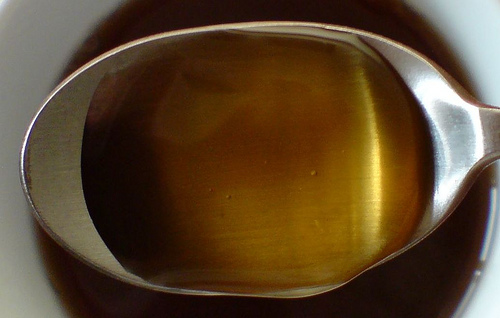
Isn’t this beautiful? Like a big bowl o’ sunshine. It reminds me of the popcorn you get at the movies - except without the excess table salt :) My popcorn is naturally yellow due to the Red Palm Oil I popped it in. I was inspired by Wardeh and her son when they popped corn in red palm oil during the ecourse Real Food Kids: In the Kitchen.

Red Palm Oil is full of Vitamin A. Fortunately, the gobs of Vitamin A contained in this palm oil is not damaged by heat - unless you allow it to smoke or burn

Just how much Vitamin A does Red Palm Oil contain? 200% of your daily value per tablespoon - that’s 10,000IU’s! Continue reading

Make Your Own! Monday link-up 9/24

Welcome to Nourishing Treasures’ Make Your Own Monday Link-Up.

I thought it would be fun for us to share our versions of store-bought foods.

What are you making on your own and no longer purchasing at the store? Share here!

I am sharing my Sourdough Starter in 12 hours recipe.

Check to see which Top 3 Submissions I featured this week… Continue reading

Nourished Baby - My #1 Choice for Pregnant and Nursing Moms and Moms to be…

Boy am I glad I happened across this gem! I only wish I had Nourished Baby eight years ago when pregnant with my first daughter - or four years ago when I was pregnant with my son.

Heather Dessinger has written what I consider to be the greatest book since Nourishing Traditions. Yes, I really mean it!

If you’ve read Nourishing Traditions, you’ve likely felt overwhelmed. Information overload! Picking out relevant information on what to feed babies can be a daunting task.

Enter Nourished Baby.

Continue reading

How to Eat Organs Without Flinching

Raise your hand if you can eat organs without flinching. I’m talking a heart on a plate. Could you do it?

I didn’t think so.

Traditional food cultures included not just your typical animal food sources (meat, milk, eggs), but organs as well.They knew what scientists are now able to prove: organs are full of concentrated amounts of vitamins and minerals and are the most nutrient-dense foods available.

Dr. Weston A. Price discovered that natives ate fresh organs full of vitamins A and D to keep them healthy, fertile, and able to maintain pregnancies with rarely a miscarriage or stillbirth. Continue reading

Benefits of Fermented Cod Liver Oil – How to Take it Without Gagging, and How it Saves You Money

There are three main questions that pop up about fermented cod liver oil (FCLO):

1. Why do I need FCLO when I am already taking CLO?

2. It’s expensive - I just can’t afford it!

3. It tastes strong - how do I mask the taste? And how do I expect my kids to take it when I can hardly down it?

This post will address these questions

Why is FCLO better than CLO?

FCLO is created traditionally, is not processed using methods which destroy nutrients. Cod Liver Oil has traditionally been processed using fermentation. Fishermen would toss cod livers in a barrel of seawater, let it sit 6-12 months, then skim the oil off the top.

In our rushed society, manufacturers don’t have time to wait 6-12 months. They want it made now, to sell now. Most brands use molecular distillation (code name for “removes all the natural vitamins and replaces them with synthetics”) or heat to process cod liver oil - which destroys EPA’s and DHA’s in the omega 3′s.
Continue reading

Cod Liver Oil – Brand Comparison Guide and Cost Analysis

I think most of us have figured out by now making a daily habit of consuming cod liver oil (CLO) is beneficial to our health, particularly now that cold and flu season is around the corner (Read: Benefits of Vitamin D - Why it’s essential to health + the best food sources). I have recently been doing some brand and price comparisons and wanted to share what I found with you.

How much do you need?

Is Vitamin D to Vitamin A ratio important?

Is FCLO really more expensive than CLO?

Which brand requires you to take 25 of their softgels to make the 1,000 IU Vitamin D requirement, thus costing you $3/serving?

Which cod liver oil brand provides “0″ IU’s of Vitamin D (and WHY would you want to bother)?

Keep reading… Continue reading

How to Protect Yourself from Cancer with Food

Once a rare disease, cancer is now widespread, affecting as much as one-third of the population. The rise in cancer in the West has paralleled the rise in factory farming and the use of processed foods containing vegetable oils and additives.

Orthodox methods for treating cancer (radiation and chemotherapy) do not prolong life. The best approach to cancer is prevention. Continue reading